
NATURE FIRST · ENRICHMENT
Keeping Your Dog Busy Indoors: Ideas for Rainy Days
Snuffle games, nose work and small thinking tasks keep a dog satisfied even when the weather rules out the long walk. Brain work tires a dog more quickly than romping around.
Rain, heat or a day when the big walk falls through: to keep your dog balanced anyway, brain work helps. Even a few minutes of sniffing or puzzling are surprisingly tiring. As a rule of thumb, a few minutes of mental work tire a dog about as much as half an hour of romping. Here are simple ideas that work without much effort.
Why brain work is so effective
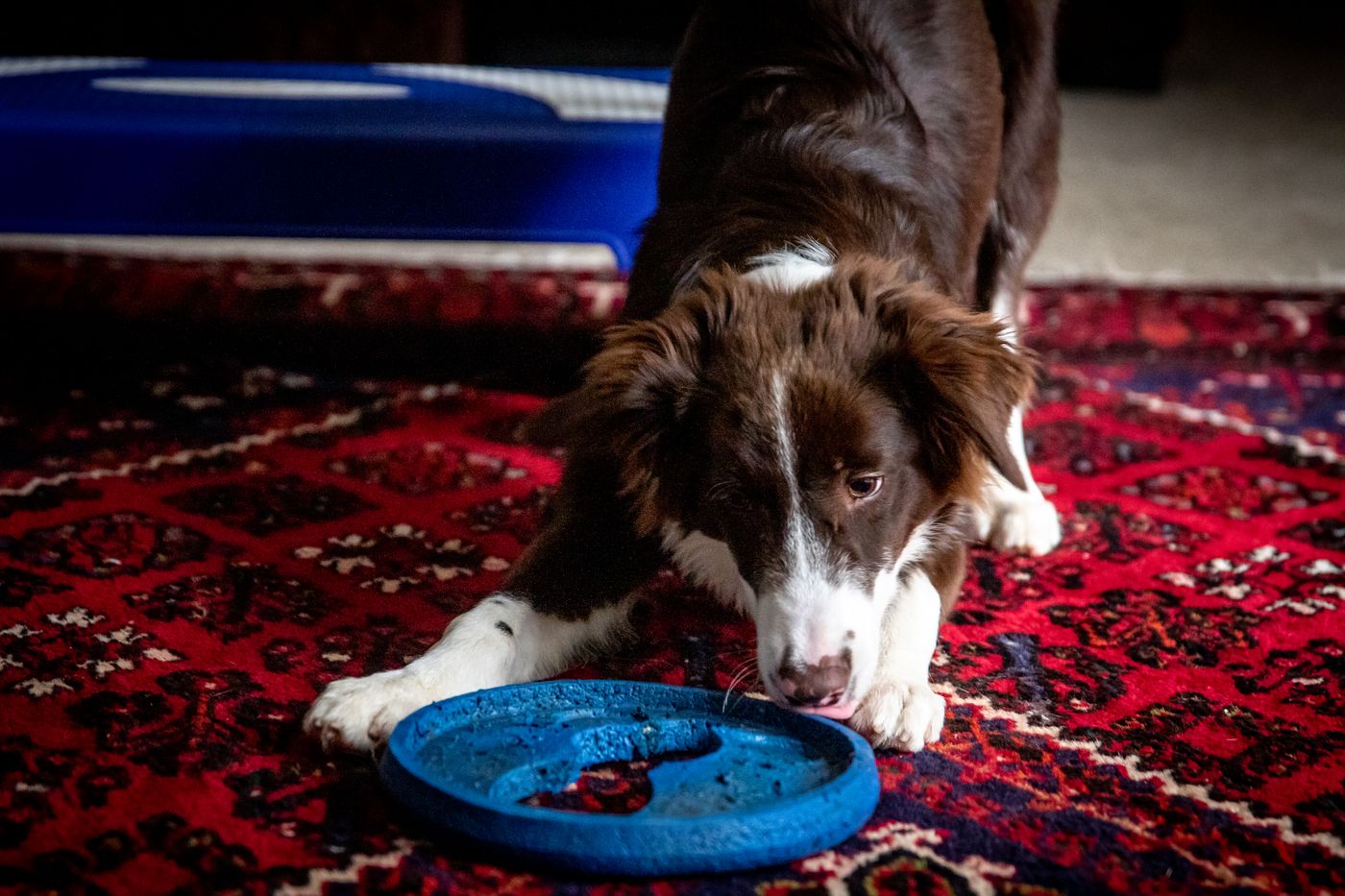
Sniffing and puzzling put the brain into high gear. That releases feel-good hormones, reduces stress and makes a dog pleasantly tired. A dog that gets to use its head settles better afterwards and invents less mischief of its own. For young, very active or older dogs that should no longer be worked hard physically, mental exercise is worth its weight in gold.
Seven ideas for indoors
Snuffle game
Hide small treats around the room and let the dog search. Start easy, then make it trickier.
Treat trail and cups
Lay a treat trail or hide a treat under one of three cups. A classic for nose work.
Puzzle toy
The dog has to work food out from under flaps or compartments. Ideal at the right difficulty.
Indoor course
Build small obstacles from blankets, chairs and cushions to crawl through, step over and weave around.
Learn tricks
Give a paw, roll over, weave through the legs. Tricks challenge the dog and strengthen the bond.
Lick mat and chew
Licking and chewing calm a dog. Great for winding down after an active session.
Forage instead of bowl
Let the dog work the daily ration out of a snuffle mat or toy instead of just placing it down.
How to keep it relaxed
Short, clear and with breaks
- Rather three to four short sessions of 10 to 15 minutes than one long one
- Start with easy tasks so the dog succeeds, then increase
- Test the difficulty: a treat under a cup, if the dog watches and nudges, the level fits
- Work with praise and calm, never overwhelm
- Plan a real rest break after the brain work
Practical helpers
Transparency note: This page contains product recommendations. As soon as we use partner programmes (for example Amazon), the relevant links are marked as advertising. If you buy through them we may earn a commission, at no extra cost to you.
Snuffle mat
Hide treats in the fabric and the dog sniffs them out. Gentle, thorough enrichment.
- Washable
- Non-slip
- Different difficulties
Puzzle toy
Flaps, sliders and compartments hiding food. Stays interesting for a long time at the right level.
- Sturdy and saliva-proof
- Difficulty to suit the dog
- Easy to clean
Lick mat
Stretches out small meals and calms, ideal for winding down.
- Food-safe silicone
- Suction cups for grip
- Dishwasher-safe
Frequently asked questions
How long should I keep my dog busy indoors?
Several short sessions of 10 to 15 minutes across the day are often enough. More important than the duration is that the dog settles down afterwards.
Does brain work really tire a dog more than romping?
Yes, mental work is very effective. A few minutes of sniffing or puzzling often work like a much longer play session.
From what age are these games suitable?
Even puppies can learn simple snuffle games, in an easy and short form. For seniors brain work is ideal because it is gentle yet still tiring.
My dog chews the toy, what should I do?
Let such dogs play only under supervision and choose sturdy, suitably sized toys. Put the snuffle mat and lick mat away after play.