
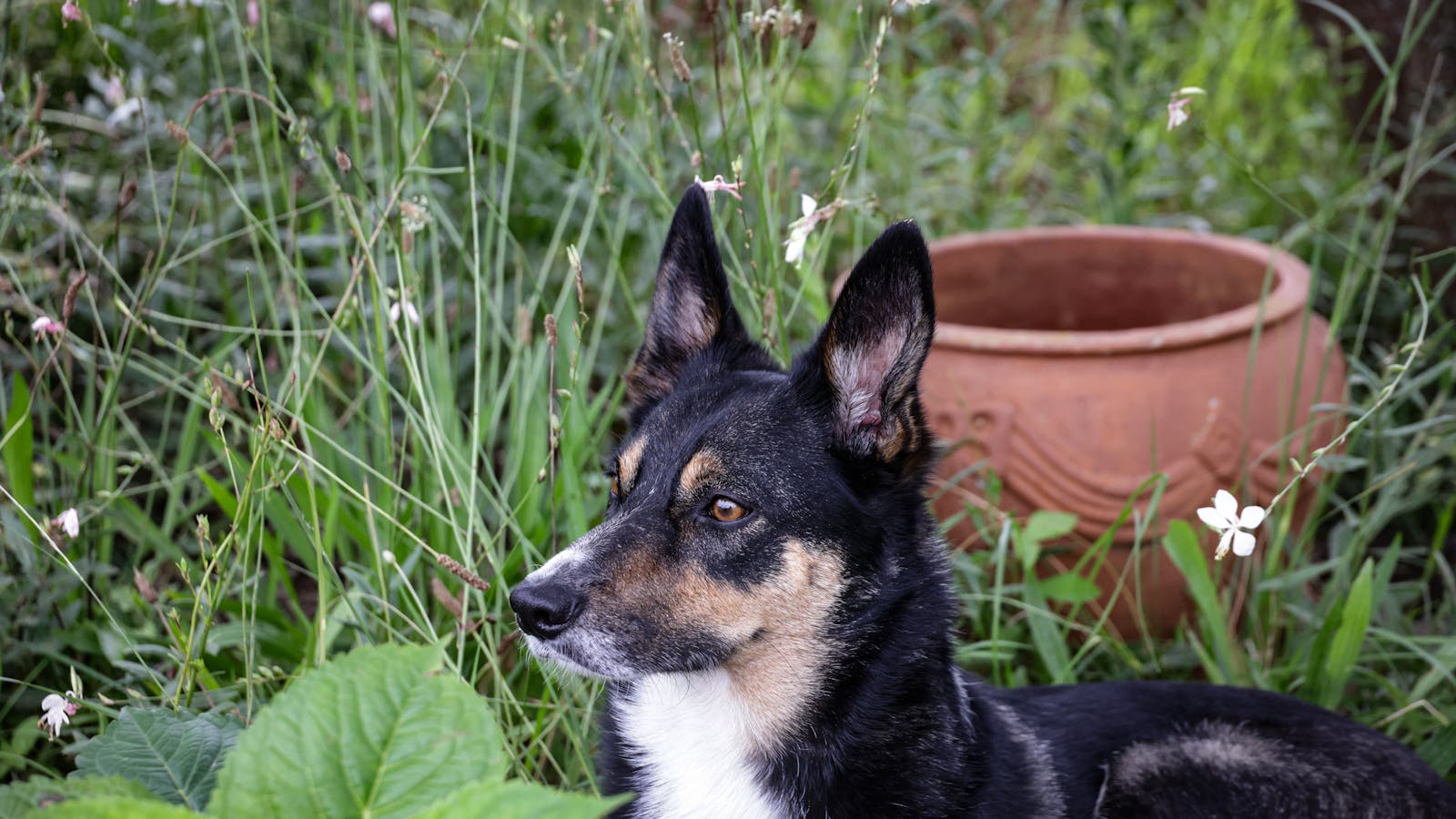
NATURE FIRST · SAFETY
Poisonous Plants for Dogs
In the garden, on the windowsill and along the path grow plants that are dangerous for dogs. Here are the most important ones at a glance, plus how to make your garden and home safer.
Dogs explore the world with their nose, and often with their mouth too. Young and curious dogs quickly nibble on plants that can be genuinely toxic. How strongly a plant affects a dog depends on the species, the amount and the dog. The good news: if you know the most common poisonous plants, you can easily defuse most of the risks.
The kitchen holds dangers too, more on that in our article on toxic foods for dogs. This overview does not replace veterinary advice, but it will help you spot dangers early.
At a glance
- Many popular garden and house plants are toxic
- Puppies and curious dogs are especially at risk
- Often all parts of the plant are affected, some particularly so
- If you suspect poisoning, call the vet or emergency service at once
Common poisonous plants at a glance
| Plant | Where it grows | Why it is risky |
|---|---|---|
| Yew | Garden, hedge | Highly toxic (needles, seeds, bark), affects the heart. Even small amounts are critical. |
| Oleander | Pots, terrace, garden | All parts of the plant are strongly toxic, strains the heart. |
| Lily of the valley | Garden, woodland | Leaves, flowers and berries are toxic, affects the heart. |
| Autumn crocus | Meadow, garden | Highly toxic, easily confused with wild garlic. |
| Angel’s trumpet & thorn apple | Garden, pots | All parts are strongly toxic. |
| Laburnum | Garden, hedge | Toxic, above all the seeds and pods. |
| Rhododendron & azalea | Garden | Leaves are toxic, strain the digestive system and circulation. |
| Ivy | Garden, indoors | Irritates skin and mucous membranes, the berries are toxic. |
| Boxwood & thuja | Hedge | Leaves and twigs are toxic. |
| Dieffenbachia & philodendron | House plants | Irritate the mouth and mucous membranes, strain the digestive system. |
| Cyclamen | Indoors | Toxic, above all the tuber. |
| Tulip, daffodil, hyacinth | Garden, indoors | The bulbs in particular are toxic, irritate the digestive system. |
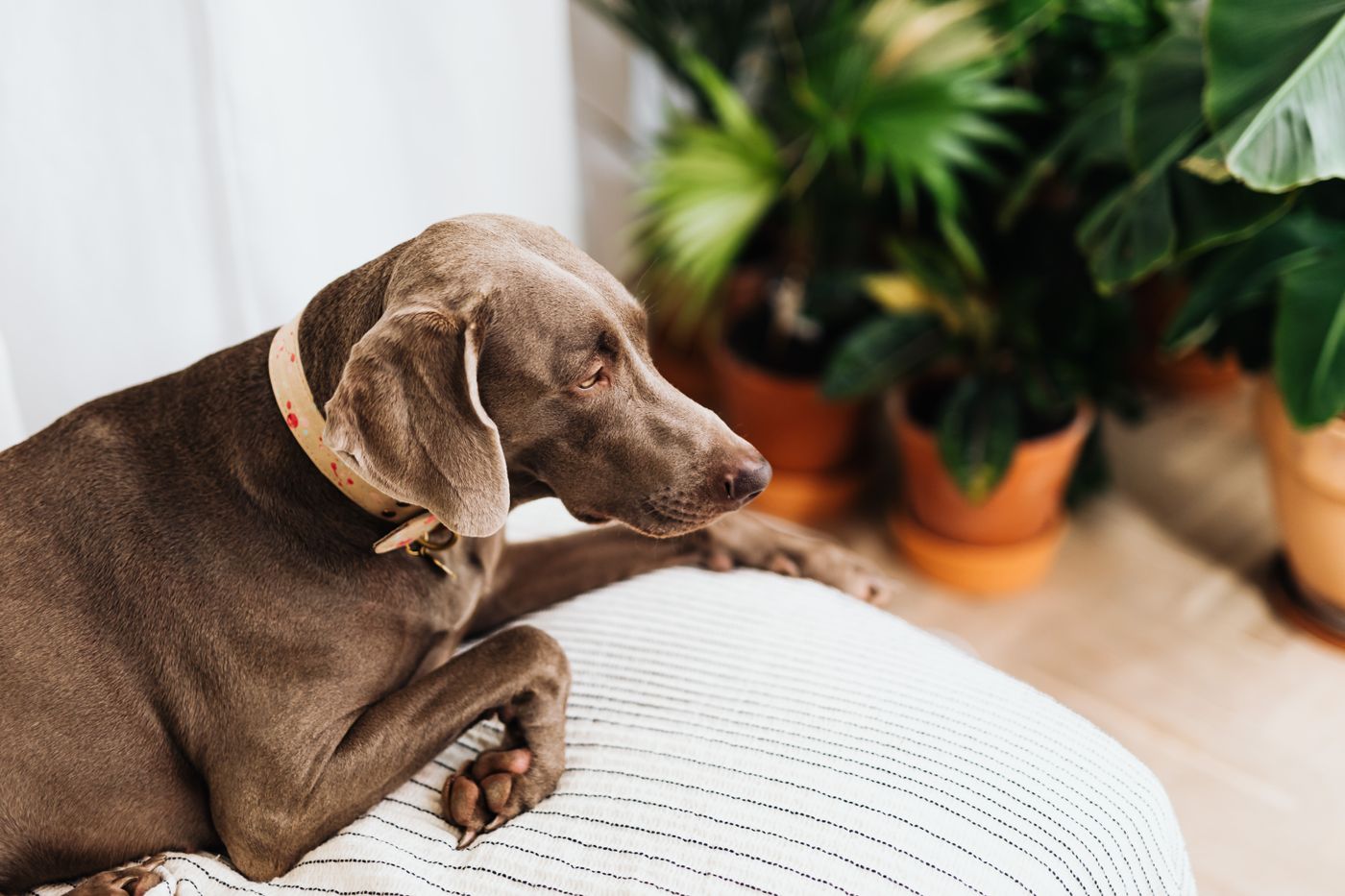
Emergency: has your dog nibbled on a poisonous plant?
Call your vet practice or the veterinary emergency service straight away. Keep the plant or a piece of it to hand (or take a photo), this helps with identification. Do not make the dog vomit without veterinary instruction and do not wait for symptoms, some appear only later. Signs can include drooling, vomiting, diarrhoea, trembling, weakness or a racing heart.
How to make your garden and home safer
Practical tips
- Know the toxic plants and place them out of reach or remove them
- Put house plants up high or in rooms the dog cannot access
- Keep an especially close eye on puppies and young dogs, they chew on everything
- Secure compost heaps and garden waste, including bulbs and tubers
- On walks, watch what is being sniffed and nibbled
- When in doubt, photograph the plant or keep a sample for the vet

Frequently asked questions
How do I recognise poisoning from plants?
Possible signs are drooling, vomiting, diarrhoea, trembling, weakness, difficulty swallowing or a racing heart. The symptoms range from mild to serious and sometimes appear only hours later. If you suspect poisoning, contact the vet immediately.
My dog nibbled on a plant. What should I do?
If possible, identify the plant or keep a sample, then call the vet or emergency service and describe the situation. Do not wait and do not give anything on your own initiative.
Are all parts of a plant always toxic?
Often yes, but the concentration varies. Some parts such as seeds, berries or bulbs are particularly critical. When in doubt, treat the whole plant as toxic.
Which plants are especially dangerous?
Among the strongly toxic ones are yew, oleander, autumn crocus and angel’s trumpet, to name a few. As many other plants are risky too, it is worth a look at the overview above.
More knowledge about your dog
From healthy feeding to a safe environment, here you will find easy to follow guides.