

NATURE FIRST · HEALTH
Food Intolerance and Allergy in Dogs
Itching, diarrhoea, a dull coat: sometimes the food is behind it. Here is how to spot the signs and find the trigger together with your vet.
When a dog reacts sensitively to ingredients in its food, it often shows up on the skin and in digestion. A true food allergy and an intolerance feel similar to the dog, and both can only be narrowed down through patient elimination. The reliable way to do this is the so called elimination diet, and that belongs in veterinary hands.
One thing to say up front: grain is not automatically the culprit, common triggers are certain protein sources. This article does not replace a diagnosis, it helps you recognise the signs and prepare for the conversation with your vet.
At a glance
- Typical signs on the skin, ears and in digestion
- Grain free is not automatically the solution
- The elimination diet is the reliable approach
- Always do the diagnosis and plan with the vet
Possible signs of an intolerance
| Area | Possible signs | Note |
|---|---|---|
| Skin & coat | Itching, redness, bald patches, a dull coat. | Often on the paws, belly and face. |
| Ears | Recurring ear infections, scratching at the ear. | A frequently underestimated sign. |
| Digestion | Soft stool, diarrhoea, flatulence, occasional vomiting. | More frequent defecation can also be part of it. |
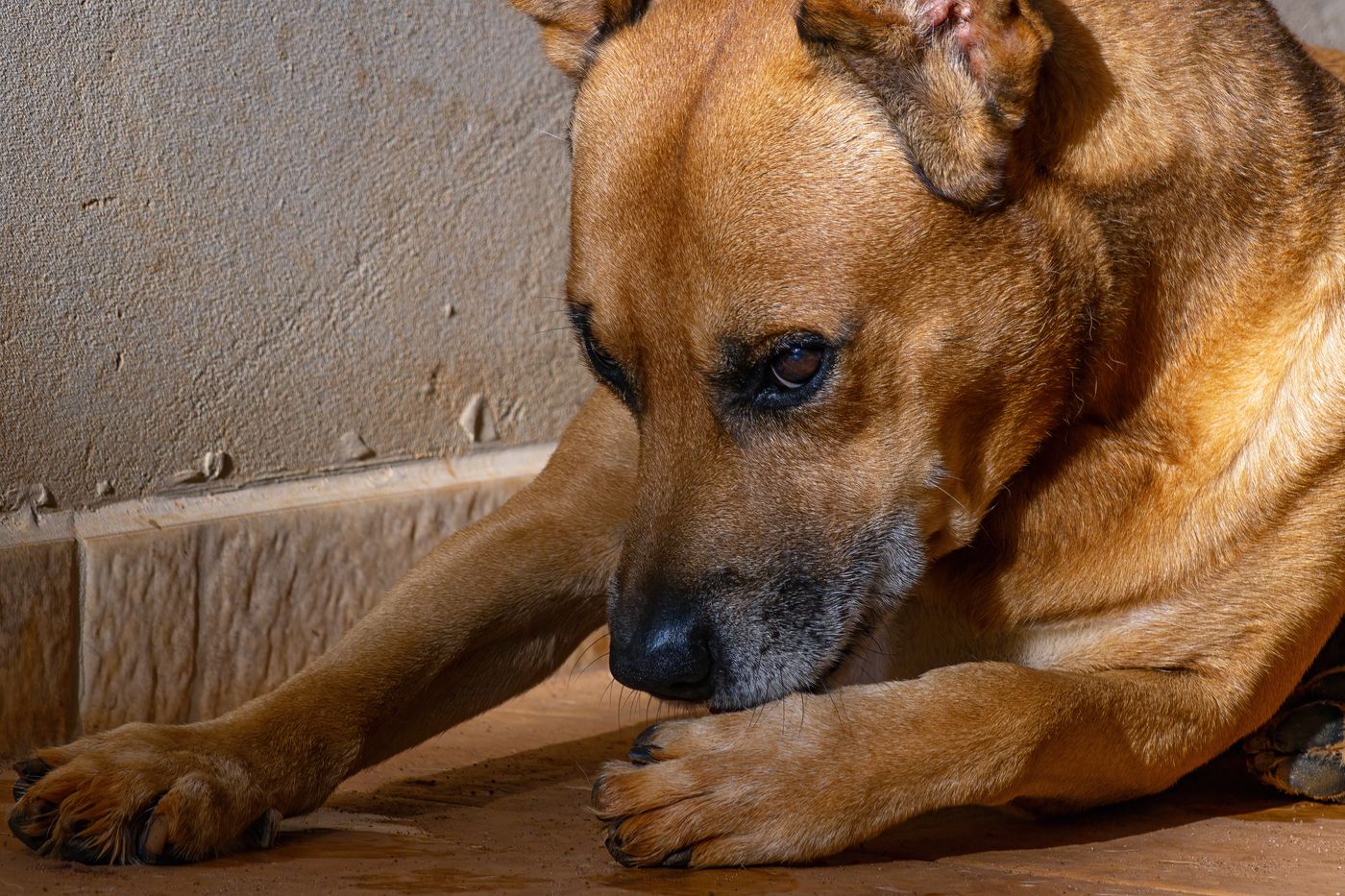
| Paws | Constant licking and nibbling at the paws. | Can be linked to itching. |
| General | Restlessness from itching, reduced wellbeing. | Have the vet rule out other causes. |

Important: diagnosis belongs with the vet
Itching or diarrhoea can also be down to parasites, infections or other illnesses. Do not make a self diagnosis and start an elimination diet only with veterinary support, that is the only way it is meaningful. Persistent itching, skin changes or gastrointestinal problems should be clarified by a vet.
How an elimination diet works
The elimination diet systematically narrows down the trigger. It is planned and supervised together with the veterinarian.
Step by step
- With the vet, choose a new protein source the dog has not had before
- Feed only this diet for several weeks
- Leave out absolutely everything else, including treats, chews and table scraps
- Observe and note whether the symptoms subside
- Then reintroduce individual components in a targeted way to find the trigger
- Bring patience, the process often takes several weeks
Frequently asked questions
What is the difference between an allergy and an intolerance?
With an allergy the immune system reacts, with an intolerance it does not. To the dog it feels similar, and in both cases the path to clarity is the elimination diet with the vet.
Does the food have to be grain free?
Not automatically. Grain is a trigger less often than commonly assumed, certain protein sources are more frequent. What suits the individual case is shown by the elimination diet.
How long does an elimination diet take?
As a rule several weeks, often eight or more. The key is to stay consistent and not feed anything on the side.
May I give treats during the diet?
Only if they fit the diet. A single wrong treat can already skew the result. When in doubt, check with the vet.
Understanding healthy feeding
What a balanced, fresh diet looks like and what matters with the individual components.