
NATURE FIRST · CARE
Coat Care for Dogs: Brushing the Right Way for Each Coat Type
Short hair once a week, dense undercoat daily during the moult: how often and with what you brush depends on the coat.
Brushing is more than cosmetics. It removes loose hair, distributes the skin’s natural oils, prevents matting and is the best moment to spot skin issues, parasites or small lumps early. Which brush suits your dog and how often you need it is decided by the coat type.
Care by coat type
| Coat type | How often to brush | The right brush |
|---|---|---|
| Short hair without undercoat (e.g. Jack Russell) | Once or twice a week | A rubber curry comb or soft pin brush gently loosens shed hair. |
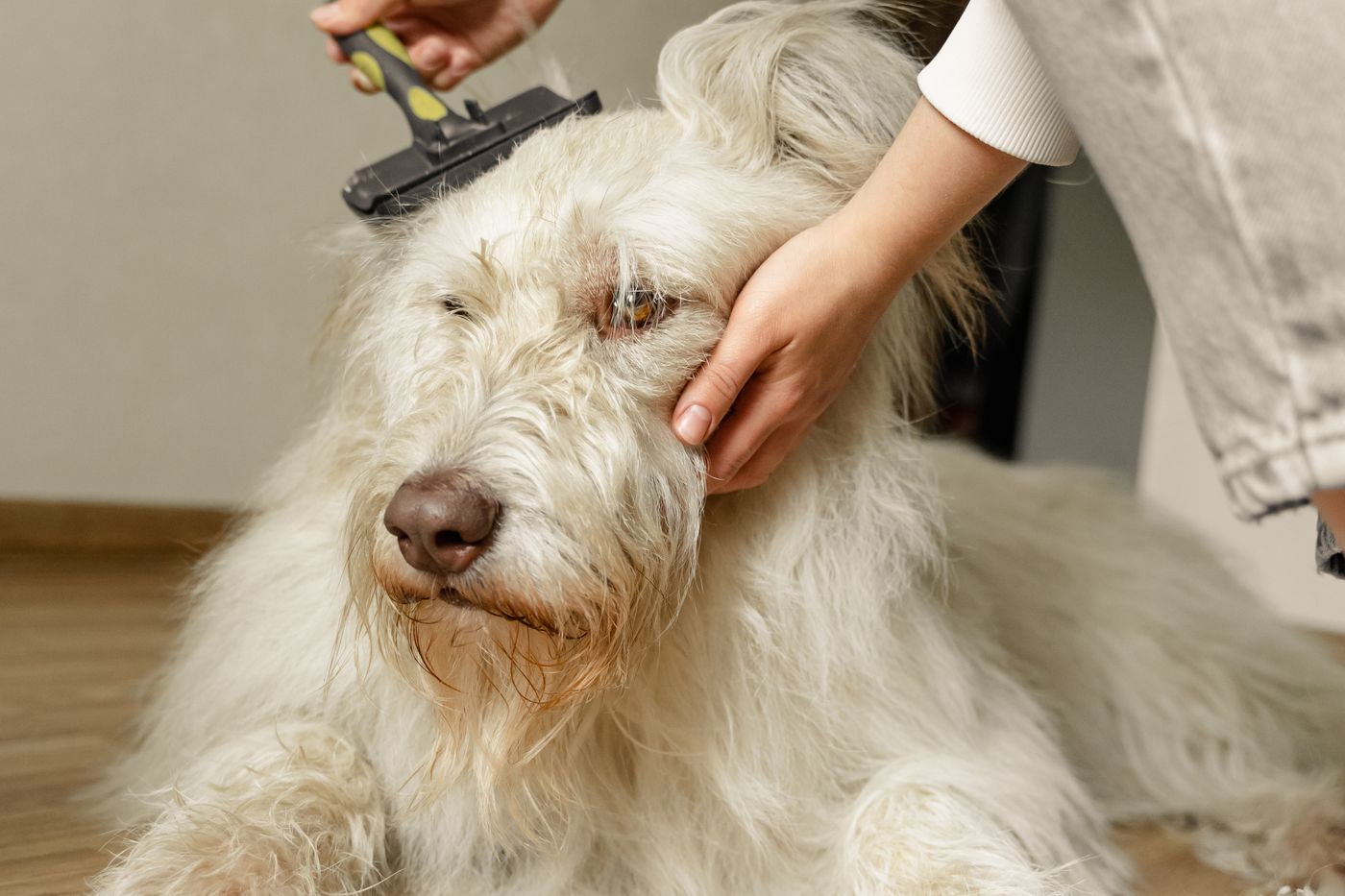
| Long hair (e.g. Tibetan Terrier, Bearded Collie) | A short session ideally every day | A slicker brush and comb to ease out tangles early. |
| Double coat with a dense undercoat | Daily during the moult | A slicker or undercoat rake pulls out the loose wool. |
| Curls and wool (e.g. Poodle) | Comb regularly, clip occasionally | A comb and slicker brush, and a grooming salon when needed. |
Moulting and bathing
The moult
The topcoat protects, the undercoat regulates temperature and sheds heavily during the change. Daily combing with an undercoat rake now helps, keeping both your home and the skin cleaner.
Bathing
Bathe only when the dog is genuinely dirty. Washing too often dries out the skin. Always use a mild dog shampoo and rinse thoroughly.
What belongs on the skin and what does not
Never wash with human shampoo, it does not match the dog’s skin pH and causes irritation. Bald patches, redness, intense itching, dandruff or a suddenly dull coat can point to skin problems, parasites or intolerances and should be checked.
How to keep grooming relaxed
A small routine, a big effect
- Brush in the direction of growth and with little pressure
- Ease tangles out gently from below, do not rip through them
- Check the ears, eyes, paws and nails while brushing
- Keep grooming positive with praise and breaks
- Increase the frequency during the moult
Frequently asked questions
How often should I brush my dog?
Short hair usually needs only once or twice a week, while long hair and undercoats need considerably more, daily during the moult.
My dog sheds heavily, is that normal?
During the moult, yes. If it sheds heavily all the time or develops bald patches, there may be more to it, and that can be checked by a vet.
Can I have the undercoat clipped?
With a double coat, comb it out rather than clip it. The undercoat protects against heat and cold, and once clipped it often grows back unevenly.