

NATURE FIRST · CARE
Trimming a dog’s nails: where the „quick“ sits
The most common reason owners do not dare: the fear of cutting into the living, blood-filled quick. Once you know where it sits, nail care becomes routine.
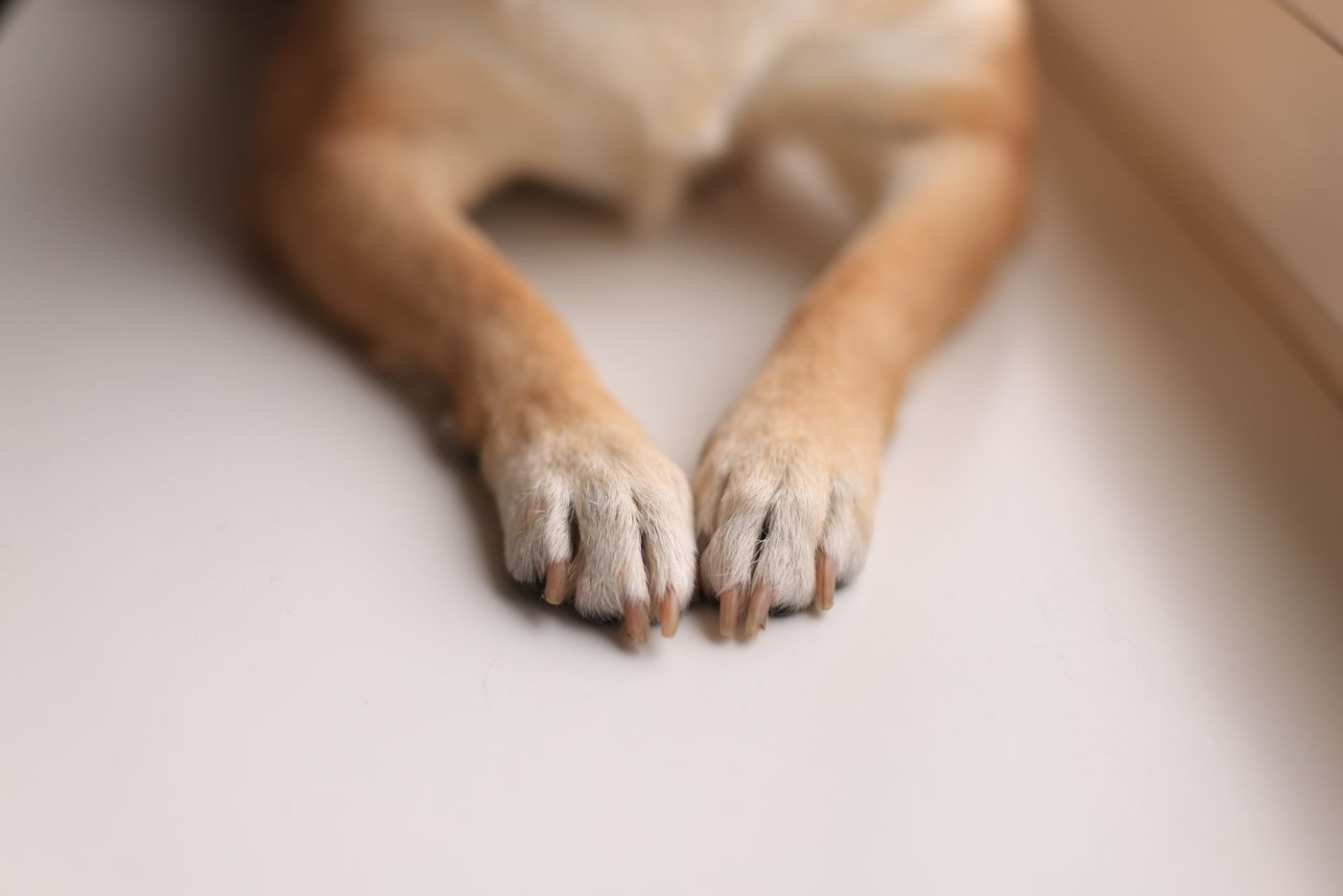
Nails that touch the floor when the dog stands, or click on tiles when it walks, are too long. Over time they push the toe into an unnatural position and force the nail bed upward, which hurts and changes posture. Trimming regularly prevents exactly that. The key is to understand how a nail is built.
Structure of the nail: horn and the „quick“
A nail consists of two parts: the hard, insensitive horn layer on the outside and the quick (also called the pulp) inside, which is supplied with blood vessels and nerves. You only ever cut the horn in front of the quick, which is painless.
In light nails the quick is easy to see as a pink core, so you keep your distance in front of it. In dark nails it is not visible; here a different approach helps, see below.
Light and dark nails: two methods
Go by the pink core
The quick shimmers through in pink. Place the clipper a few millimetres in front of it and trim the clear tip. Better a touch too little than too much.
With light and in stages
The quick is not visible. Shine a torch through the nail from behind, or trim in small steps. If a dark dot appears in the centre of the cut surface, the quick is close, so stop.
Trimming step by step
Create calm
Have the dog lie or sit relaxed, holding the paw loosely in your hand. If it is agitated, do just one nail a day.
Position the clipper
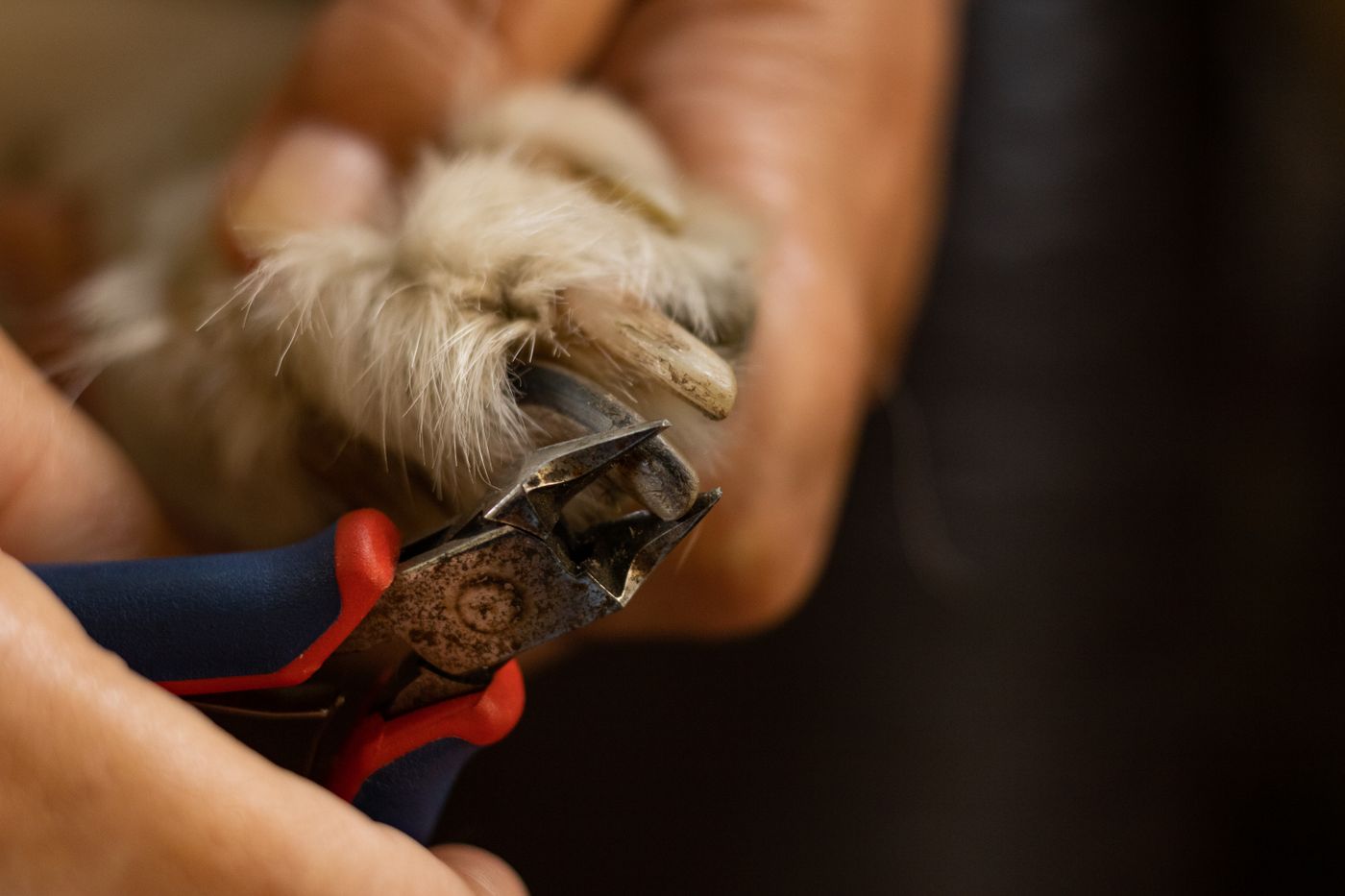
Place a sharp nail clipper at a right angle to the tip, well in front of the quick.
Trim the tip
Take off only the tip. With dark nails, work in several small cuts and check the cut surface.
Praise
Reward after every nail. Do not forget the dewclaw on the inside of the leg, it does not wear down on its own.
If it does bleed
If you hit the quick, it bleeds and hurts briefly. Press a clean cloth against it or use a styptic powder, and it usually stops quickly. If it bleeds heavily or for a long time, call your veterinary practice. If you are unsure the first time, have the cut shown to you there or at a grooming salon once.
Frequently asked questions
How often do I need to trim the nails?
Often enough that they do not touch the floor when the dog stands. Dogs that walk a lot on tarmac wear their nails down and need the clipper less often. As a guide: check every three to six weeks.
Clipper or electric grinder?
Both work. A clipper is fast and quiet, a grinder takes off very finely and is pleasant with thick or dark nails because you can ease your way in slowly. What matters is that your dog tolerates the noise.
What if my dog resists?
Get it used to paw contact in small steps, one single nail per session, then something nice afterwards. That way the dog associates the procedure with something positive rather than with force.