
NATURE FIRST · BUYING ADVICE
The right dog bowl: material and height
Stainless steel or ceramic, standard or raised? Two questions decide hygiene and relaxed eating.
When choosing a bowl, people often reach for the prettiest model. Yet two things matter more than looks: the material, which decides hygiene and durability, and the height, which should suit the dog. Get these right and you will have years of peace and an animal that eats calmly.
In short
- Stainless steel is the easy all-rounder
- Plastic can irritate the sensitive skin on the chin
- Height as a rough guide: shoulder height minus 10 to 15 cm
- Gulpers benefit from a slow-feeder bowl
The materials compared
| Material | Strengths | Weaknesses |
|---|---|---|
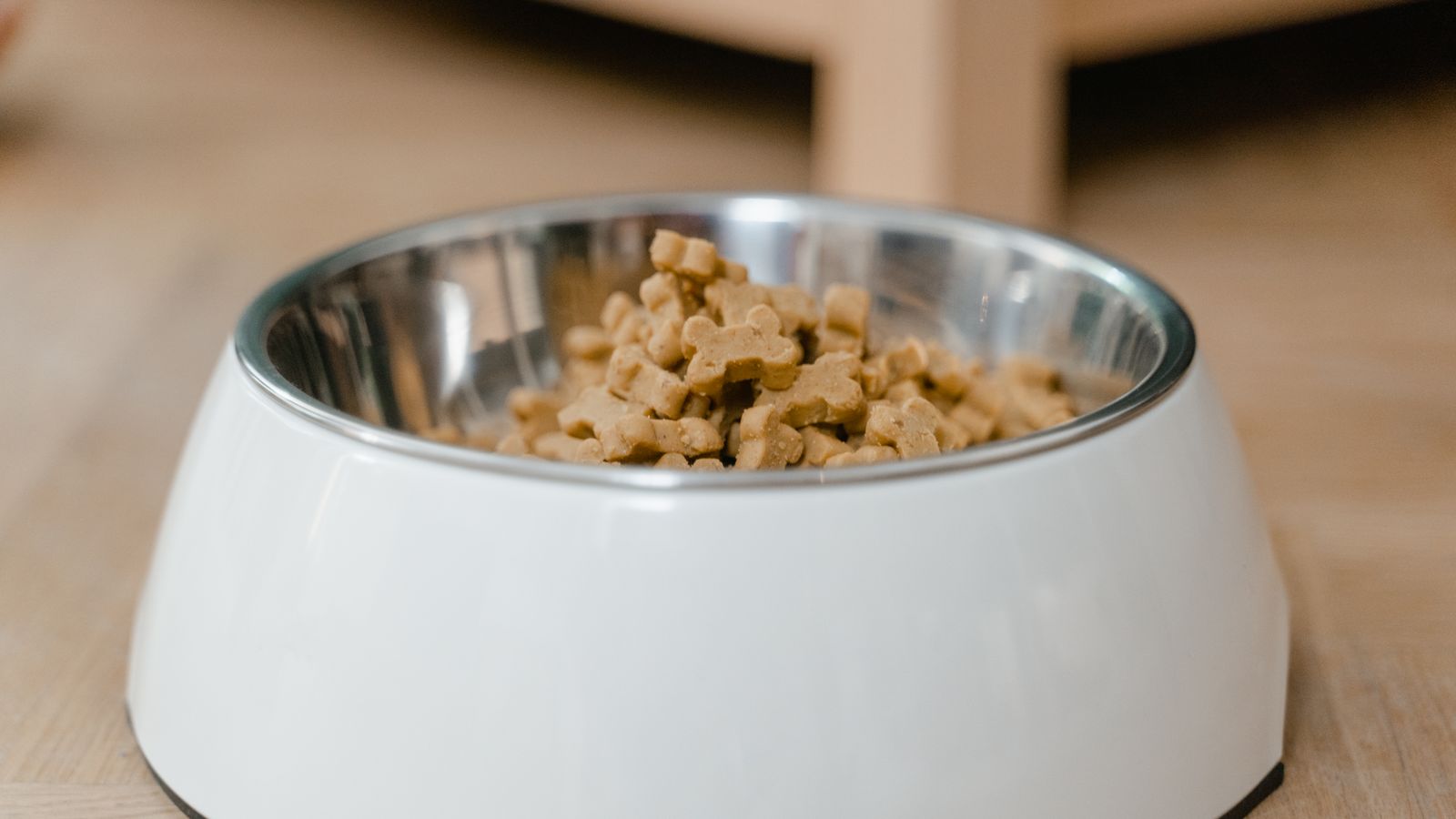
| Stainless steel | Shatterproof, dishwasher-safe, hygienic, long-lasting. | Lightweight, slides around without a rubber rim. Very rarely a metal intolerance. |
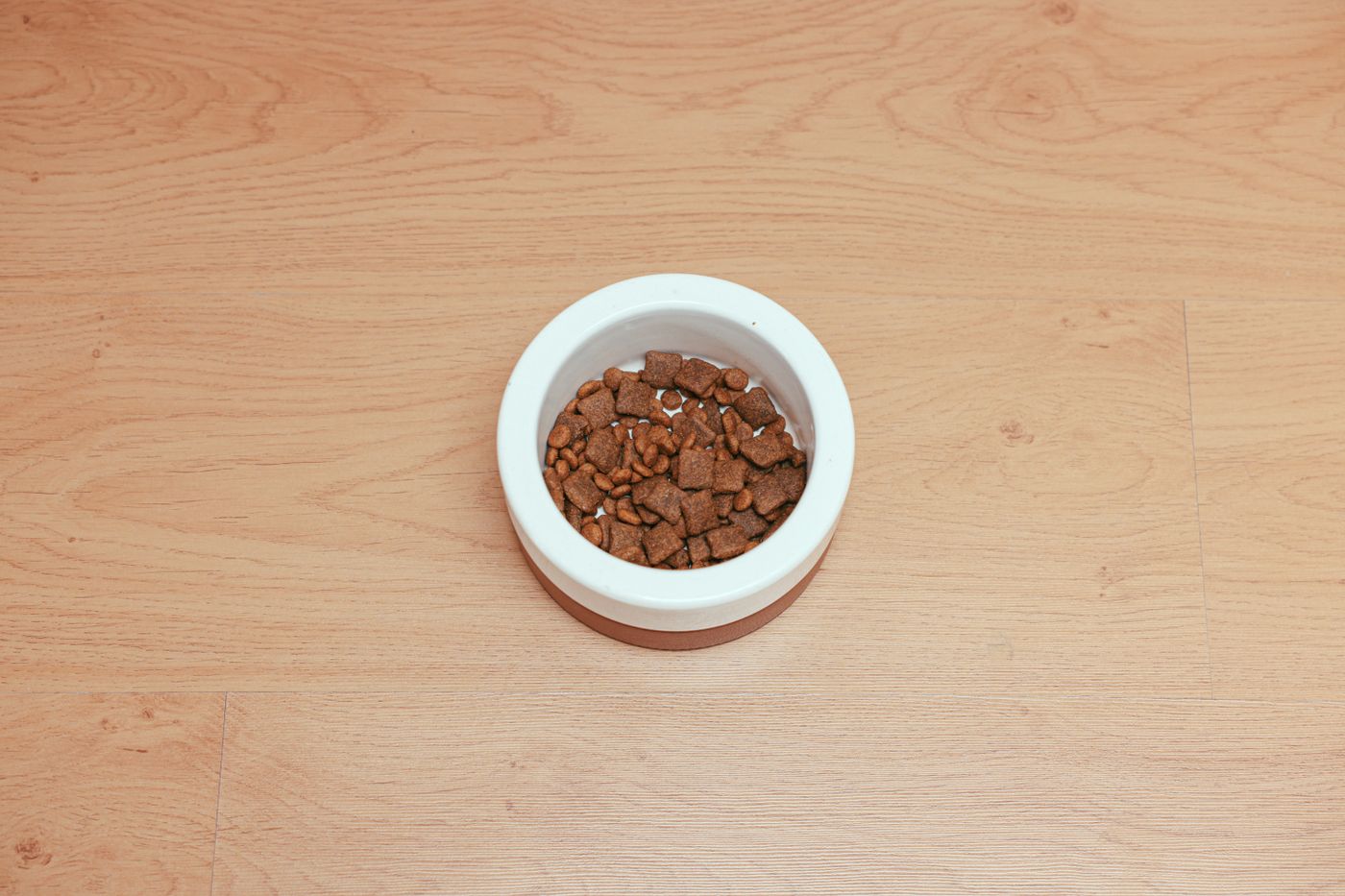
| Ceramic | Heavy and stable, hygienic smooth glaze, attractive look. | Can chip or break, then stop using it. |
| Plastic | Cheap and light. | Gets scratches where germs settle, can trigger chin acne and contact allergies. |
For most dogs, stainless steel is the simplest choice, ideally with a rubber rim to stop it wandering. Ceramic is a good alternative as long as it is undamaged. Scratched plastic is best avoided, and if your dog reacts with spots or redness on the chin, the material is a typical suspect.
Finding the right height
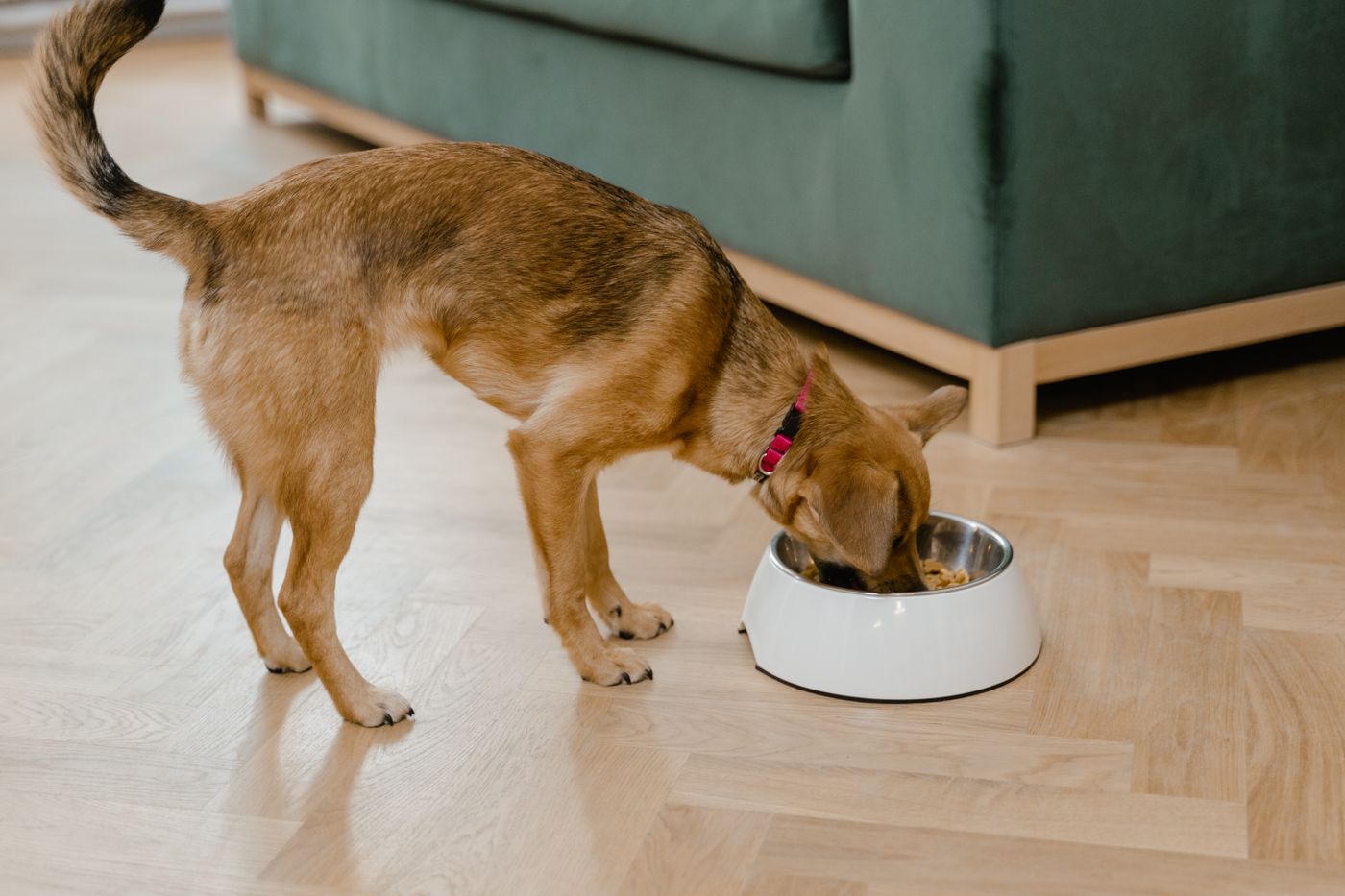
As a rough guide: measure your dog’s shoulder height and subtract 10 to 15 cm, so the top rim of the bowl sits roughly at chest height. Small dogs usually eat from the floor without any trouble. For large and older dogs, a raised bowl can relieve the shoulders and neck, because they do not have to bend down so far.
“A raised bowl protects against bloat”
It is not that simple. The evidence is inconclusive, older studies even saw a higher risk, newer ones disagree. Choose the height for comfort, not as supposed protection.
Slow-feeder bowl
Ridges and hollows force the dog to eat more slowly. This helps dogs that bolt their food hastily and swallow a lot of air, and makes eating calmer.
What to look for when buying
The short buying checklist
- Material: prefer stainless steel or ceramic
- Size and capacity to match your dog’s portion
- Non-slip footing from a rubber rim or a mat
- Height based on shoulder height, check raised for large dogs
- Slow-feeder version for hasty eaters
- A second bowl for water, always filled
Frequently asked questions
How is the best way to clean the bowl?
Rinse food bowls after every fresh-food meal, stainless steel and ceramic can go in the dishwasher. Rinse the water bowl daily and refill it fresh.
My dog is getting spots on the chin, what causes this?
This is often what is called chin acne, encouraged by scratched plastic bowls. Switching to stainless steel or ceramic and cleaning daily usually helps.
Which size is right?
The bowl should hold the portion easily without food spilling over, but not be so huge that it invites gulping. Match it to body size and food amount.