
NATURE FIRST · ENRICHMENT
Puzzle Toys for Dogs: Smart Mental Exercise
Brain games challenge the mind, reduce stress and make a dog pleasantly tired. What matters when choosing one, which difficulty fits and how to build your own cheaply.
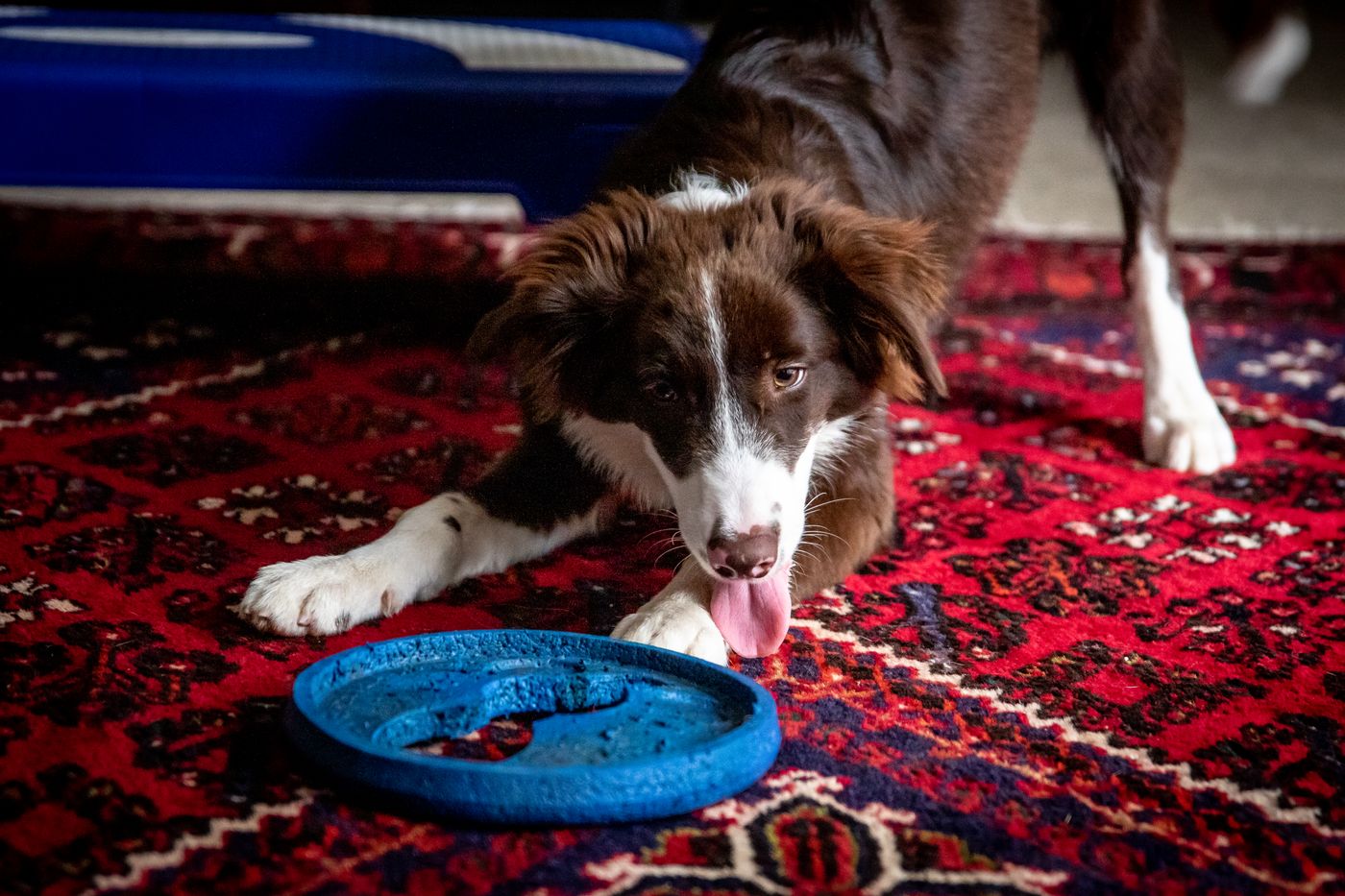
A puzzle toy, often called a strategy game, lets a dog work with nose and paws for food hidden under flaps or in compartments. That challenges the mind, and mental work is very effective at tiring a dog out. To keep it fun rather than frustrating, the right difficulty and a little safety matter.
When puzzle toys help the most
Mental exercise is valuable for almost every dog, but especially in some situations. For breeds with a strong drive to work such as the Border Collie, Malinois or Australian Shepherd, it helps channel their constant energy. For older dogs that should no longer be worked hard physically, it is a gentle alternative. And on rainy days it makes up a little for the walk that did not happen.
Finding the right difficulty
The toy should challenge but not overwhelm. A simple test shows the right level: hide a treat under one of several cups and let the dog watch. If it nudges and searches deliberately, it can be trickier. If it gives up quickly, start easier. Success motivates, so start too easy rather than too hard.
| Level | Suitable for | Example |
|---|---|---|
| Easy | Beginners, puppies, seniors | Open compartments, treats only lightly covered. |
| Medium | Dogs with some practice | Sliders and flaps that have to be moved. |
| Hard | Motivated puzzlers | Combinations of several steps in sequence. |
Built cheaply yourself
You do not need to spend much to challenge your dog’s mind. With a few household items you can build a brain game in minutes.
Three ideas from the household
- Fill a muffin tin with treats and place tennis balls on top for the dog to remove
- Roll up or knot a towel with treats tucked inside to be unravelled
- Fill empty toilet rolls with a little food and stand them in a box
Play safely
- Stay nearby at first. Dogs that nibble on the material should play only under supervision, with sturdy and suitably sized toys.
- No swallowable small parts. Put homemade games away after play.
- Not a replacement for everything. Brain games add to exercise, walks and time together, they do not replace them.
Proven classics
Transparency note: This page contains product recommendations. As soon as we use partner programmes (for example Amazon), the relevant links are marked as advertising. If you buy through them we may earn a commission, at no extra cost to you.
Strategy board
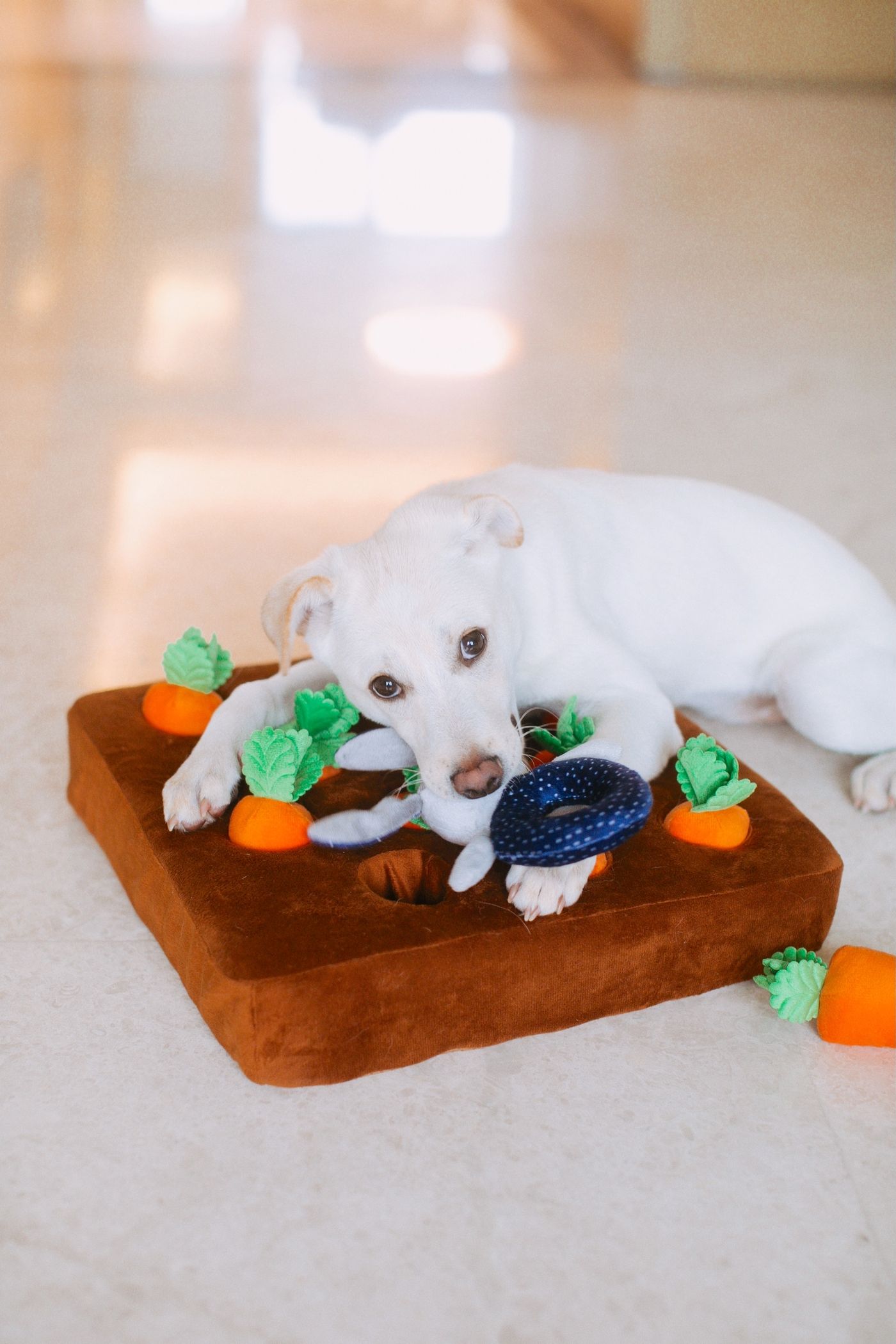
Sliders, flaps and compartments in various difficulties, the classic among brain games.
- Sturdy and saliva-proof
- Several levels
- Easy to clean
Snuffle mat
Treats in the fabric for the dog to sniff out. Calm, thorough enrichment.
- Washable
- Non-slip
- Also for seniors
Fillable chew toy
Fill with food and freeze, keeps a dog busy for a long time and calms.
- Natural rubber, robust
- Right size
- Dishwasher-safe
Frequently asked questions
How often should I offer puzzle toys?
Rather regularly in short sessions than rarely and long. To keep it exciting, put the toy away in between and rotate.
From what age are puzzle toys suitable?
Even puppies can learn simple versions. For seniors they are ideal because they are gentle yet still tiring.
My dog chews the toy, what should I do?
Let it play only under supervision, choose sturdy material and put it away after play. For strong chewers, pick especially robust models.
Do puzzle toys replace the walk?
No. They add to exercise and time together, especially on days with little outdoor time, but do not replace them long term.