
NATURE FIRST · BARF KNOWLEDGE
Which Meat for BARF? Types, Suitability and What Is Off-Limits Raw
Meat is the heart of every raw ration. Which types make sense, how much organ meat belongs in the bowl and which meats have no place in it raw.
With BARF, everything revolves around the meat. But not every type is equally suitable, and a few meats do not belong in the bowl raw at all. Once you know which muscle meat forms the base, why organ meat and tripe matter and what to watch with bones, a balanced ration is easy to put together. What counts is balance over time, not every single meal has to be perfect.
How a ration is composed
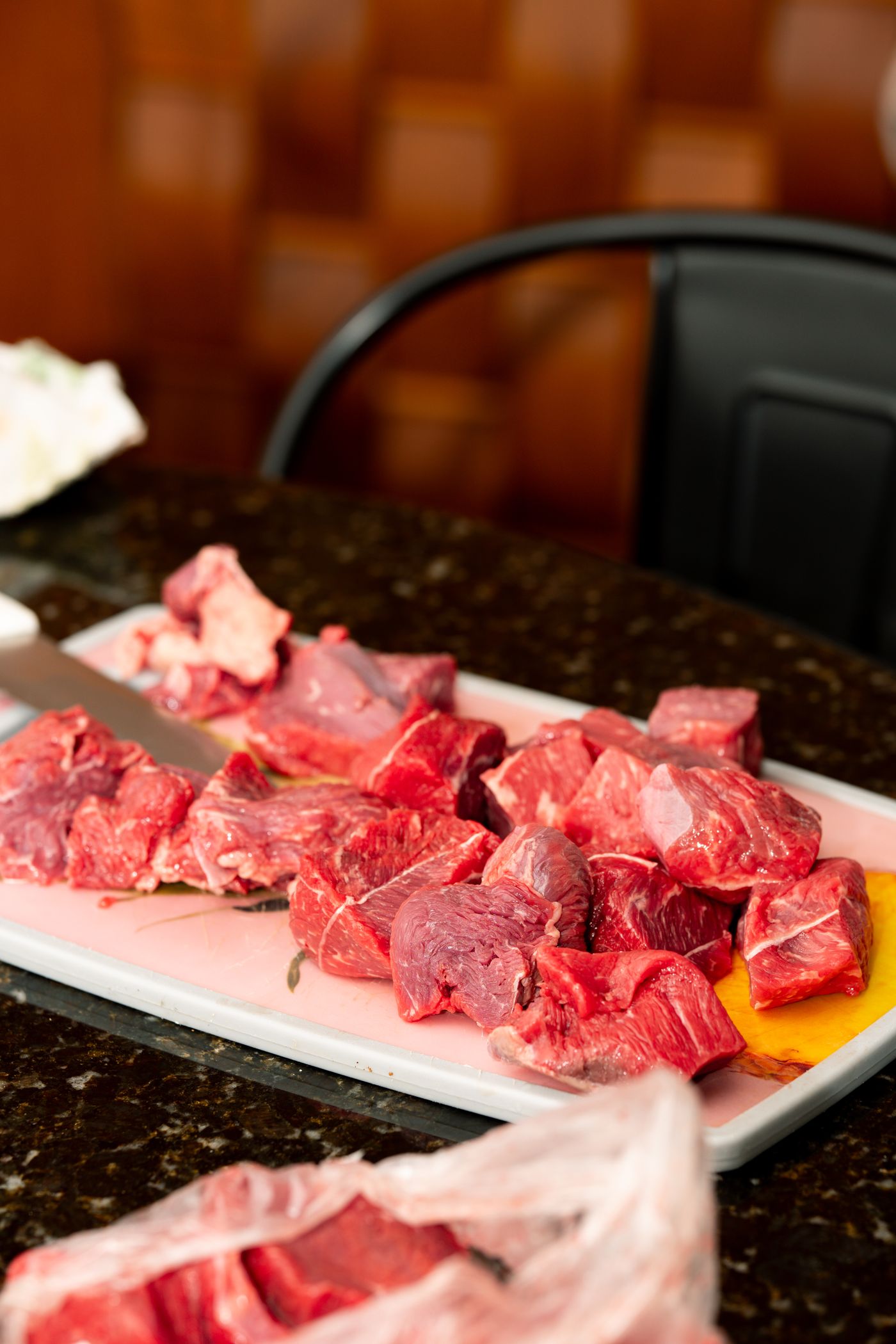
A useful guide is the prey principle: around 80 percent animal and 20 percent plant components. Within the animal part, the following ratios are common. They are not dogmas but a framework you balance out over the week. Work out the exact daily amount with our calculator.
| Component | Guide value | Role |
|---|---|---|
| Muscle meat | about 50 percent | Protein and amino acids, the foundation of the ration. |
| Tripe and omasum | about 20 percent | Pre-digested plant matter and enzymes, very popular. |
| Organ meat | about 15 percent | Vitamins and minerals, small in dose but crucial. |
| Raw meaty bones | about 15 percent | Calcium and dental care, only raw and the right size. |
Muscle meat: the base
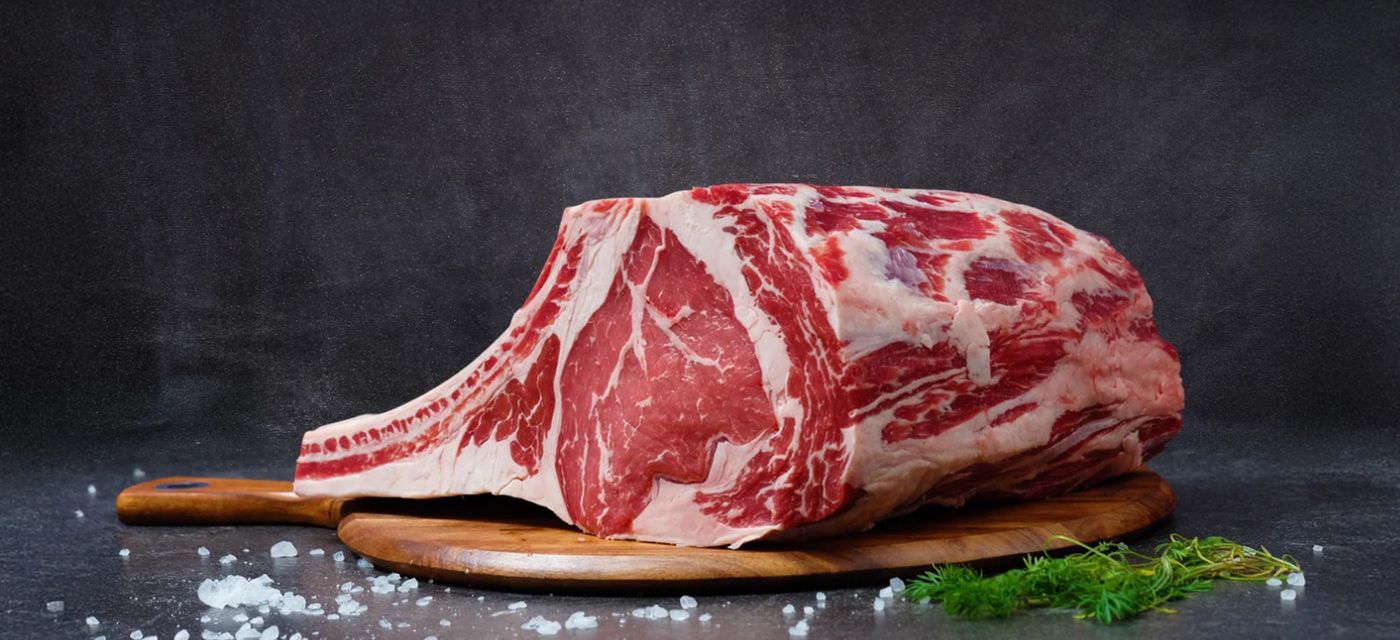
Muscle meat provides the protein and makes up the largest part of the ration. Good to know: heart does not count as organ meat but as strong, lean muscle meat and is an affordable base. Many different animal species over time are better than always just one.
| Type | Suitability | Note |
|---|---|---|
| Beef | Very good, a classic | Lean cuts and heart, well tolerated, widely available. |
| Chicken and turkey | Ideal for starting out | Easy to digest, lean, the soft bones are suitable raw too. |
| Lamb and goat | Good | A little fattier, tasty, good variety. |
| Rabbit | Good, lean | Often well tolerated, even by sensitive dogs. |
| Horse | Good for allergies | Rarely fed, so popular with intolerances. |
| Fish | Good, once or twice a week | Provides omega-3, fatty types like salmon or herring. |
| Game (deer, venison) | Good | Lean and natural, freeze well due to possible parasites. |
Organ meat: small but crucial
Organ meat is the vitamin store of the ration. It only makes up a small part but is important. Too much at once can lead to soft stool, so introduce it slowly.
Liver
Very rich in vitamin A, so only about five percent of the ration. Too much can harm over time.
Kidney
Provides trace elements and vitamins, a good building block in small amounts.
Spleen and lung
High in protein and low in fat, good for lightening the ration, lung is not very filling.
Heart
Strong muscle meat with taurine, affordable and popular, not a substitute for real organ meat.
Tripe, omasum and bones
Green tripe, the uncleaned forestomach of ruminants, is the absolute favourite of many dogs. It smells strong but provides pre-digested plant matter, enzymes and bacteria that belong to natural prey. Omasum works similarly and is lower in fat.
Raw meaty bones clean the teeth and provide calcium. Important: only feed bones raw, never cooked, because cooked bones splinter dangerously. The size has to suit the dog, and a gulper should only get bones ground or under supervision.
These meats do not belong in the bowl raw
- Pork and wild boar raw. They can transmit the Aujeszky virus (pseudorabies), which is always fatal for dogs and has no treatment. Only fully cooked is pork safe. Wild boar can also contain trichinella.
- Cooked bones. They splinter and can injure the gut. Only ever feed bones raw.
- Too much liver. The high vitamin A content can build up over time, so dose it sparingly.
Raw meat contains germs such as salmonella. Healthy dogs usually cope well thanks to their short, acidic digestive tract, but normal hygiene rules apply in the kitchen. For puppies, sick or immunocompromised dogs and when in doubt, it is best to discuss feeding with your vet.
What beginners should start with
Start simple, then expand
- Begin with a well-tolerated type, for example chicken, turkey or beef
- First plain muscle meat, then gradually add organ meat, tripe and bones
- Introduce one type after another, that way you spot intolerances
- Vary over the week, different species bring different nutrients
- Be patient during the transition, the gut adjusts step by step
Where to get the meat
You do not need a fixed supplier to start raw feeding. Meat and organ meat are available at the butcher, from direct producers, in well-stocked shops and online as frozen meat. Which source is worth it and how to save money is covered in detail in our sourcing guide.
Transparency note: This page contains product recommendations. As soon as we use partner programmes (for example Amazon), the relevant links are marked as advertising. If you buy through them we may earn a commission, at no extra cost to you.
Frozen meat online
Pre-portioned raw meat, delivered frozen. Handy when there is no butcher nearby.
- Single type or as a mix
- Frozen, easy to store
- Clear labelling
Meat grinder
Grinds bones and meat finely, ideal for dogs that do not chew calmly.
- Strong motor for bones
- Easy to clean
- Saves money on large amounts
Freezer containers
For freezing in portions and thawing cleanly, low odour and stackable.
- Food-safe, freezer-proof
- Sealed and stackable
- Practical portion sizes
Frequently asked questions
Which meat is best to start with?
Easily digestible, lean types like chicken, turkey or beef. Start with one type plain and add organ meat, tripe and bones only gradually.
Can my dog eat raw pork?
No. Raw pork and wild boar can transmit the Aujeszky virus, which is fatal for dogs. Only fully cooked is pork safe.
How much organ meat belongs in the ration?
About 15 percent of the animal part, of which liver is only around five percent. Too much organ meat at once can soften the stool.
Can I feed my dog beef only?
Not ideal in the long run. Different species provide different nutrients. Vary over the week and add organ meat and tripe.
Are raw bones not dangerous?
Raw bones of the right size are usually safe and clean the teeth. Only cooked bones are dangerous because they splinter. Gulpers should get bones ground or under supervision.