
NATURE FIRST · WELLBEING
Teaching a Dog to Relax: Calm and Massage
Calm can be learned. With quiet rituals and gentle touch you help your dog wind down, reduce stress and settle more easily.
Many dogs become wound up faster than you would think. Constant stimulation, too few breaks and excitement all add up. The good news: relaxation can be practised. Through quiet rituals and touch your dog learns to wind down on a signal. That lowers stress and strengthens your bond.
Why rest is so important
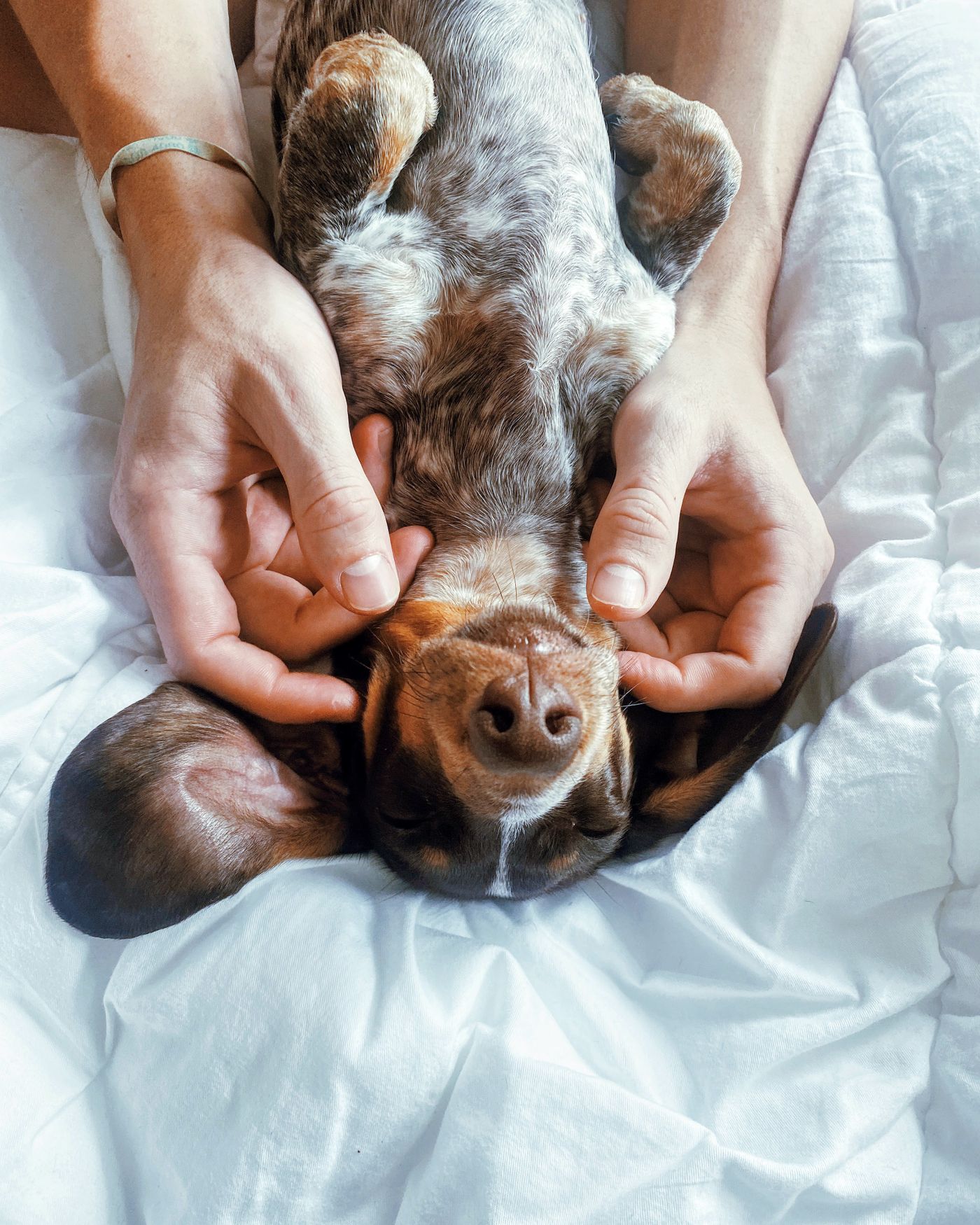
Dogs need a great deal of rest, an adult dog spends around 18 to 20 hours a day dozing, resting and sleeping. If it is constantly entertained or flooded with stimuli, it never recovers and easily slides into a stress spiral. A dog that has learned to relax is more balanced, sleeps better and reacts more calmly to excitement.
Practising relaxation step by step
Conditioned relaxation means: you first practise calm in a relaxed situation so your dog can show it on cue later. The key is to start small and quietly.
Choose a calm moment
Practise when your dog is already calm, not in the middle of excitement.
Link a signal
A quiet word, a particular blanket or a gentle touch becomes the sign for relaxation.
Lead into calm
Wind the dog down further with slow stroking or gentle combing, entirely without action.
Call it up
Over time the signal alone is enough for the dog to find calm even in livelier moments.
Dog massage at home
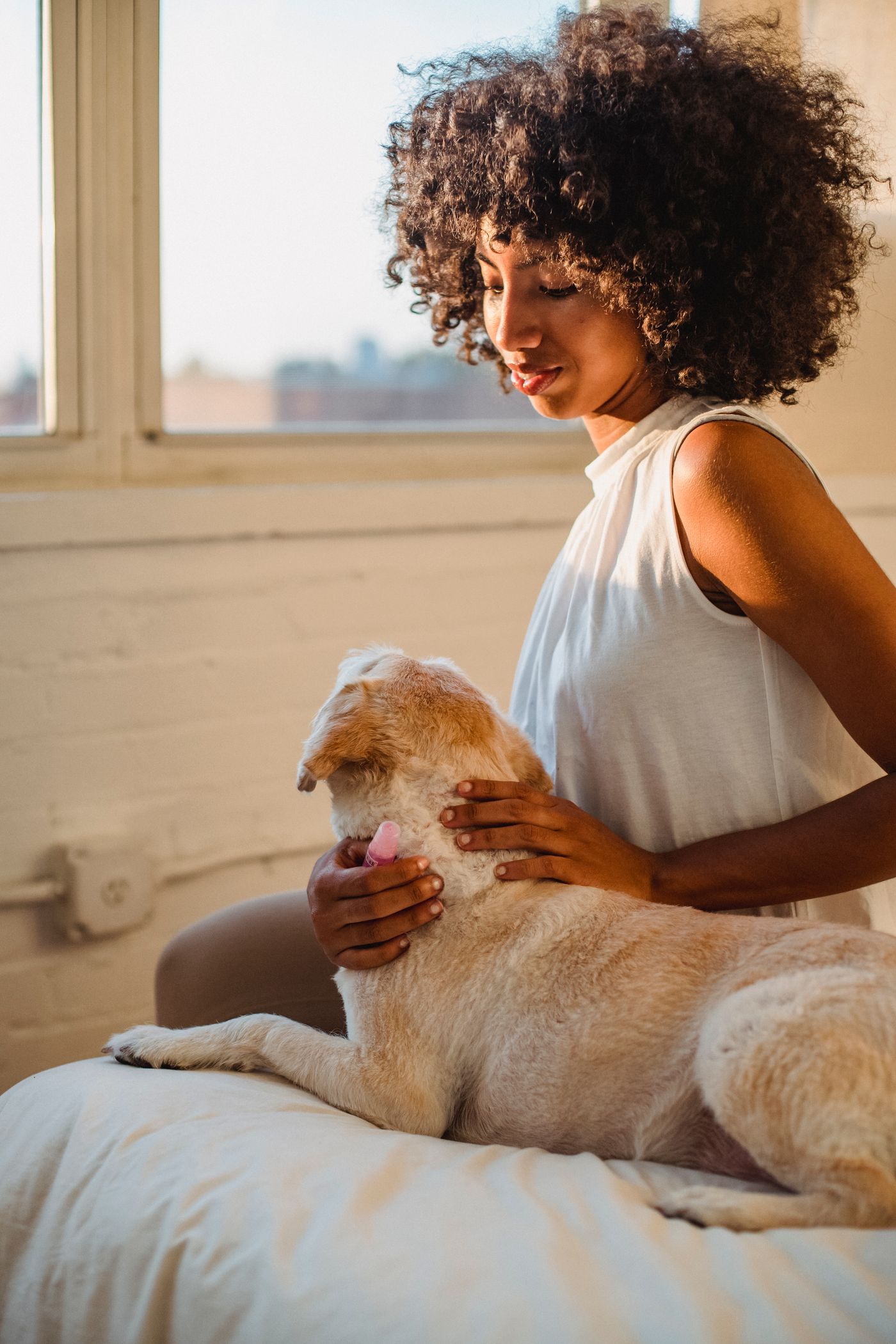
Gentle touch has a physically calming effect. During quiet stroking the bonding hormone oxytocin is released, which lowers stress and activates the rest system.
Gentle and slow
- Stroke with a flat hand in slow, calm strokes over shoulder and back
- Sensitive areas like belly, paws and tail only if the dog likes it
- Watch the reaction, if it turns away or tenses, take a break
- Never massage over painful or injured spots
- Even a few calm minutes in the evening help with winding down
When more is needed
Relaxation exercises and massage do good but do not replace treatment. If real fear is behind the restlessness, for example on New Year’s Eve, or your dog shows lasting stress, support from a good dog school or your vet is worthwhile. Sudden sensitivity to touch or pain reactions belong with the vet.
Practical helpers
Transparency note: This page contains product recommendations. As soon as we use partner programmes (for example Amazon), the relevant links are marked as advertising. If you buy through them we may earn a commission, at no extra cost to you.
Orthopaedic dog bed
Supports the joints and invites real relaxation, especially for larger and older dogs.
- Shape-retaining foam
- Washable cover
- Right size
Cuddle blanket
A fixed rest blanket becomes the signal for relaxation and gives a sense of security.
- Soft and washable
- Robust
- For basket and on the go
Lick mat
Licking calms, ideal as a quiet ritual after an exciting day.
- Food-safe silicone
- Suction cups for grip
- Dishwasher-safe
Frequently asked questions
Can you teach a dog to be calm?
Yes. Through conditioned relaxation the dog learns to wind down on a signal. You practise first in calm moments so it works later in excitement too.
Does massage really help my dog?
Gentle touch releases the calming hormone oxytocin and activates the rest system. That relaxes and strengthens the bond, but does not replace treatment for pain.
How much rest does my dog need?
A great deal. An adult dog rests and sleeps around 18 to 20 hours a day. Too little rest makes a dog irritable and wound up.
My dog never settles, what should I do?
Turn down stimulation, create fixed rest spots and practise relaxation. If the restlessness remains, a good dog school or your vet can help.